

It’s Child’s Play: The crisis on the US playgrounds.
- aleksandrachawda

- Mar 9, 2023
- 4 min read

“Kids nowadays don’t know how to play anymore. When we were their age…”
We didn’t have playgrounds, slides, hula hoops or four square.
When you grow up in an impoverished environment, you learn to adjust. Kids back then were very inventive. We’d each commit to cutting out the elastic bands of our parents’ underwear, tying them together and playing Chinese jump rope. On Fridays we could get our clothes dirty cause laundry day was always on Saturdays. That meant that in the winter, when it snowed, we’d slide down the hill by the school. It was pure ice by the time all the kids were done with it.
Our playground was the park and the forest. Our teacher would take us mushroom picking in the fall. 30 kids, one teacher and zero chaperones in an open forest. That’s impressive classroom management . Our field trips were also to the cemetery, where we’d lay down flowers and light candles on the graves of fallen soldiers. Afterwards, the kids had free reign of the cemetery and were encouraged to visit family graves.
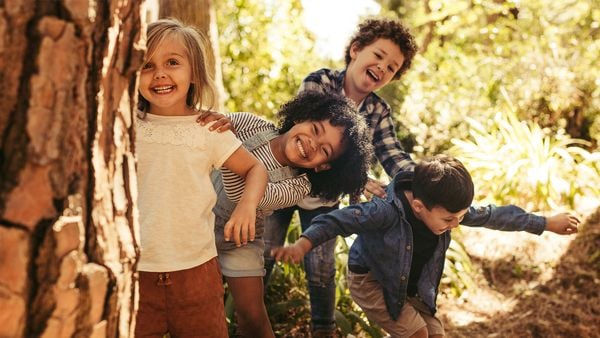
The best days were when our teacher would take us to the park. This wasn’t just any park, it was a magical place filled with treasures like broken glass, sticks, rocks and puddles. Our teacher would leave us alone to play while she took a coffee break with a friend. The time the class spent at the park depended on the amount of new gossip the two friends had.
We never got rowdy cause we knew the consequences. The homeless man that lived in the park would come out and discipline us. He was the Polish version of the Home Alone pigeon lady and he terrified us all. We’d all play hide and seek, race each other or play soccer. The girls had a secret hideout near a tree where boys were not allowed. The girls from all grade levels would contribute to the “house.” Each group would help clean, organize, collect flowers and broken glass that served as plates or vases. We’d make soup out of mud. No one ever destroyed this special house, it was our pride and joy.
Mental wellness was and still is taboo in many cultures. Looking back, we engaged in play therapy and communicated with each other through play.
Schools nowadays spend extreme amounts of money on mental wellness, implementing SEL curriculum, training teachers, hiring directors and somehow always falling short. Spoiler: it somehow always has to do with money. The US is going to spend $1 billion dollars in the next five years on mental health. Can’t throw money at it all. There’s a crisis on the elementary school playgrounds. The kids have nothing to play with. Ironic, right? Schools spend so much money on playground structures, buddy benches and it’s somehow always tied to money. Schools and playgrounds are designed for neurotypical kids with advanced social skills. Recess, lunch and the playground are a big source of anxiety for many of our students.
To avoid or calm social anxiety, many adults turn to their phones, even though we’d like to believe that we all have amazing social skills. What do kids turn to on the school playgrounds? Basketball, skill ball and four square all require communication, risk taking and somehow always end in conflict. All of those games require the groups’ acceptance, strong self-esteem and solid confidence.

What do the other children do? The kids with selective mutism, low self-esteem, the newcomers, kids on the spectrum and those with poor social skills? They sit alone, read or walk around. I have yet to see a 6 year old boy hula hooping his way through recess. And really, how fun is the playground when you always play by yourself? Being lonely and walking around at recess doesn’t strengthen self-esteem and only damages mental health. Social isolation has a tremendous impact on the child’s development. No child should feel lonely, especially in school, where they are surrounded by so many kids.
When the bell rings, those same students sit through outrageously expensive SEL lessons given by teachers that dread giving them. We teach kids all about social skills but don’t give them opportunities to practice. Schools limit many of those opportunities or squash them altogether. “Don’t run, don’t wrestle, don’t go up the slide, don’t stand on the tambark, don’t go here, don’t yell, don’t do this, don’t do that.” Man… these little people are sometimes held on a tighter leash than prisoners. Pretty sure prisoners get more yard time too.
Schools spend so much money building buddy benches that no one uses. The children that don’t have anyone to play with lack the confidence and social skills to sit there and engage with others. Balloons are much cheaper.

It doesn’t take much, just mini sand trays, plastic animals, balls, balloons, bubbles, music, cars, games at recess and UNO. Btw, never underestimate the therapeutic power of UNO. Oh, and I really don’t buy the “kids are gonna destroy them and we just don’t have the money.” Right. If there’s money for buddy benches, yard duties, and SEL curriculum, there should be money for toys. Those are the basics of childhood. Everyone knows that trouble brews when kids have nothing to do. Misbehaviors and bullying intensify during unsupervised times. It is much easier for adults to supervise busy kids that are having fun.
All children like toys and in order to learn the skill, they need to practice. All children require different levels of support. Some require closer play facilitation, while others are more independent. Either way, it’s magical to watch children implementing social skills, making friends and having fun at recess. Toys are low risk, students can engage with others at their own pace, or play alone. Toys lower anxiety, help children process worries, they boost the child’s self-esteem and mood. They bring all kinds of students together: the newcomer, the child with selective mutism, the kid on the spectrum and the social butterfly. It’s interesting that none of the toys have been destroyed yet. On the contrary, students take care of them, always return them and treat the play area with respect. These playtime opportunities foster social skills, independence, cooperation, responsibility and accountability. Children learn, communicate, process and resolve conflict through play. A box of toys is a million times more beneficial (and cheaper) than that fancy SEL curriculum students are mandated to sit through. Children learn through practice, and it’s difficult to learn if you aren’t given the opportunities. After all, “toys are the children’s words and play is their language.”


Comments